Why does LoRA work with rank 4 when weight matrices span thousands of dimensions? Practitioners set this by trial and error, yet the answer almost certainly lies in the geometry of the low-dimensional subspaces where foundation models encode their knowledge. The same structure underlies neural collapse, representation superposition, intrinsic dimensionality, and multimodal alignment.
This workshop bridges the classical, active tradition of subspace and manifold methods — long present in ACCV's main program — with the era of foundation models. It brings together the developers of subspace methods with the practitioners who build large models, and gives the Asian and international vision community a dedicated venue to connect this geometry to today's largest models.
Half-day workshop — invited talks, contributed oral presentations, a panel, and a poster session. Morning session on 14 December 2026, Grand Cube Osaka, Room 1001. Detailed clock times to be posted once finalized.
Research interests
University College London. Statistical pattern recognition, machine learning, computer vision, and high-dimensional data analysis.
Invited talk
“Beyond dataset distillation: Leveraging distilled data for both training efficiency and test effectiveness”
Deep learning heavily relies on large-scale datasets for model training, making training efficiency a critical challenge. Dataset distillation has emerged as a promising paradigm to address this challenge by condensing an original dataset into a significantly smaller set of highly informative samples. However, models trained on distilled data often exhibit a substantial gap in test effectiveness compared with their counterparts trained on the full original dataset. This raises two fundamental questions: Why does this gap arise, and how can we leverage distilled data to simultaneously improve the efficiency of model training and the test effectiveness of trained models? In this talk, I will present some of our recent efforts to address these two questions. Specifically, I will discuss our investigation into the sources of the test performance gap between distilled-data training and full-data training, as well as our strategy to better exploit distilled data for achieving both more efficient model training and improved test performance.
with Takashi Shibata and Makoto Terao
Research interests
NEC Corporation. Subspace methods and Grassmann manifold learning; cross-modal retrieval and discriminant feature extraction.
Invited talk
“Controlling Vision-Language Models through Structured Representations: Retrieval, Usability, Adaptation, and Knowledge Preservation”
Vision-Language Models (VLMs) encode rich knowledge about the relationships between visual content and language, yet their outputs do not always reflect what users need, what matters in an image, or what should be retained as the models evolve. This talk presents our recent efforts to control these capabilities through structured representations, spanning context-aware retrieval, object-aware enhancement, and continual knowledge preservation. Rather than rebuilding large pretrained models, our approach seeks to organize, emphasize, and preserve the knowledge already embedded in their representation spaces. Through these studies, I will discuss a path toward VLMs that remain useful, adaptable, and effective under diverse and evolving requirements.
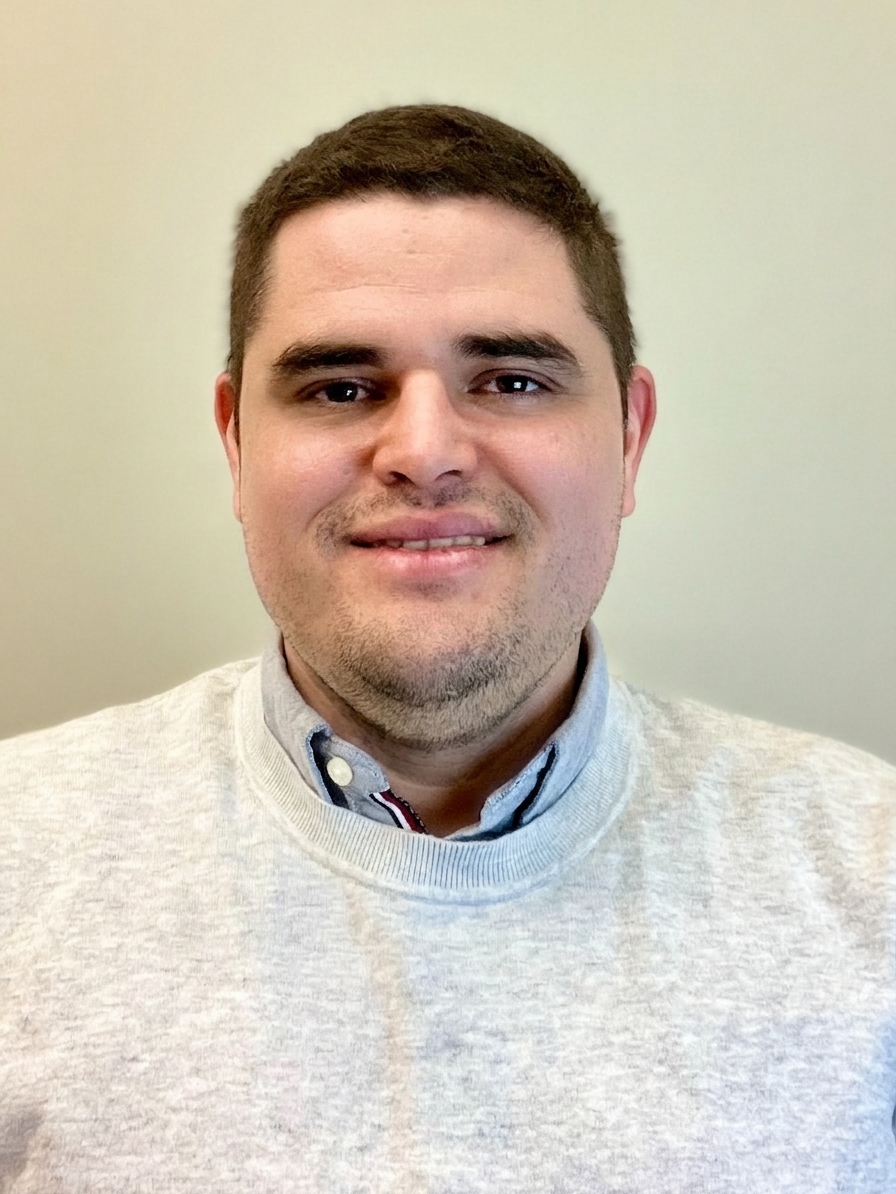 Prof. Lincon Souza
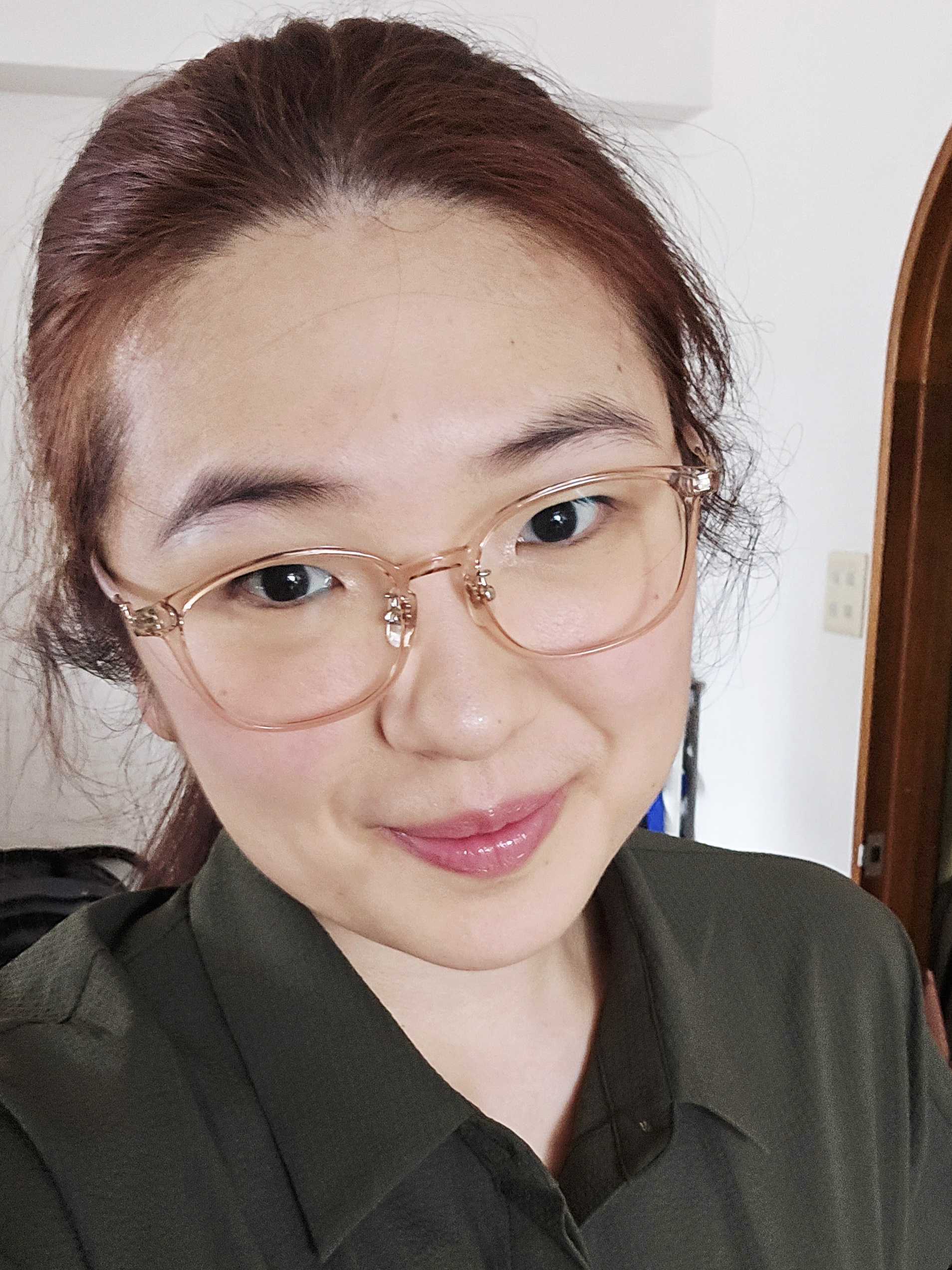 Dr. Erica K. Shimomoto
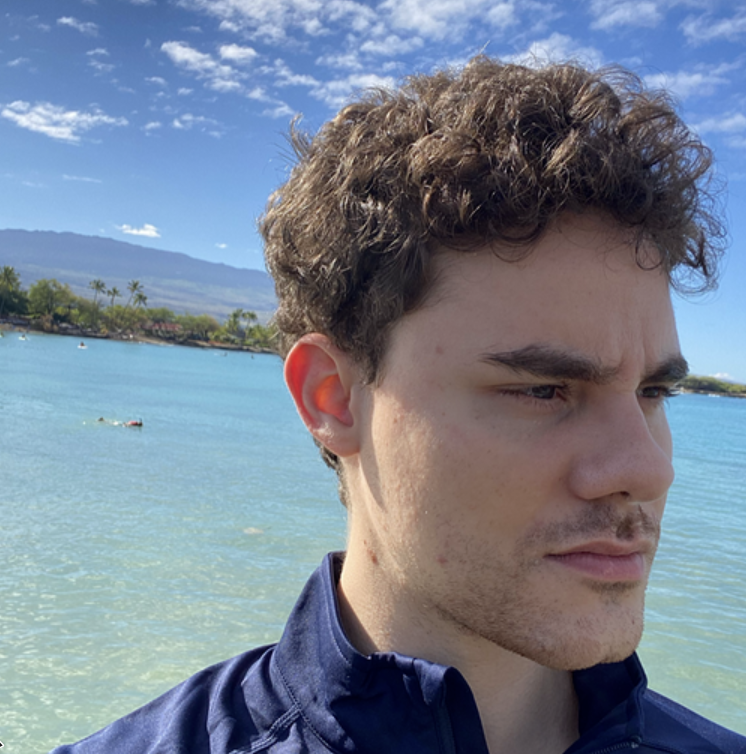 Dr. Pedro H. V. Valois